 mikoo
mikooExamples / 2026-09-03
Scene photos for three products that have nothing in common
A serum, a bag of dog treats and a desk lamp, each placed in a setting that fits it. Same request shape, three very different products.
The scene-photo request is always the same shape: here is the product, put it somewhere it belongs, two settings. What changes is what "belongs" means, and the agent works that out from the photo.
Dog treats
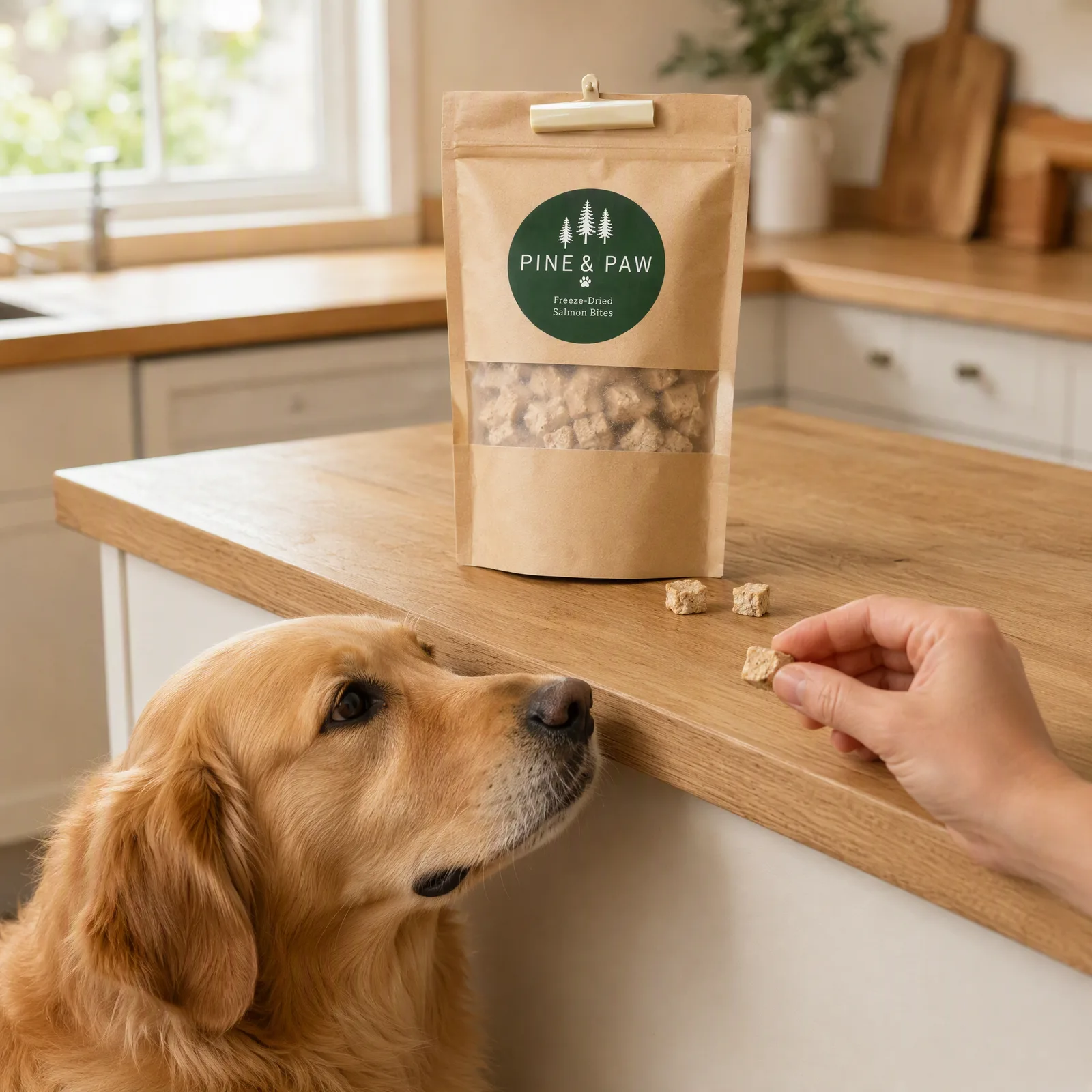
Two scene shots, 1:1: one on the kitchen counter, my hand offering a piece with the golden waiting; one on a picnic blanket in the park with the bag and a bowl.
The buyer wants to see a dog wanting it. The kitchen frame puts the treat between a hand and a nose, the bag standing behind, label toward camera. The picnic frame is the same bag outdoors with a bowl, for the feed.
Desk lamp
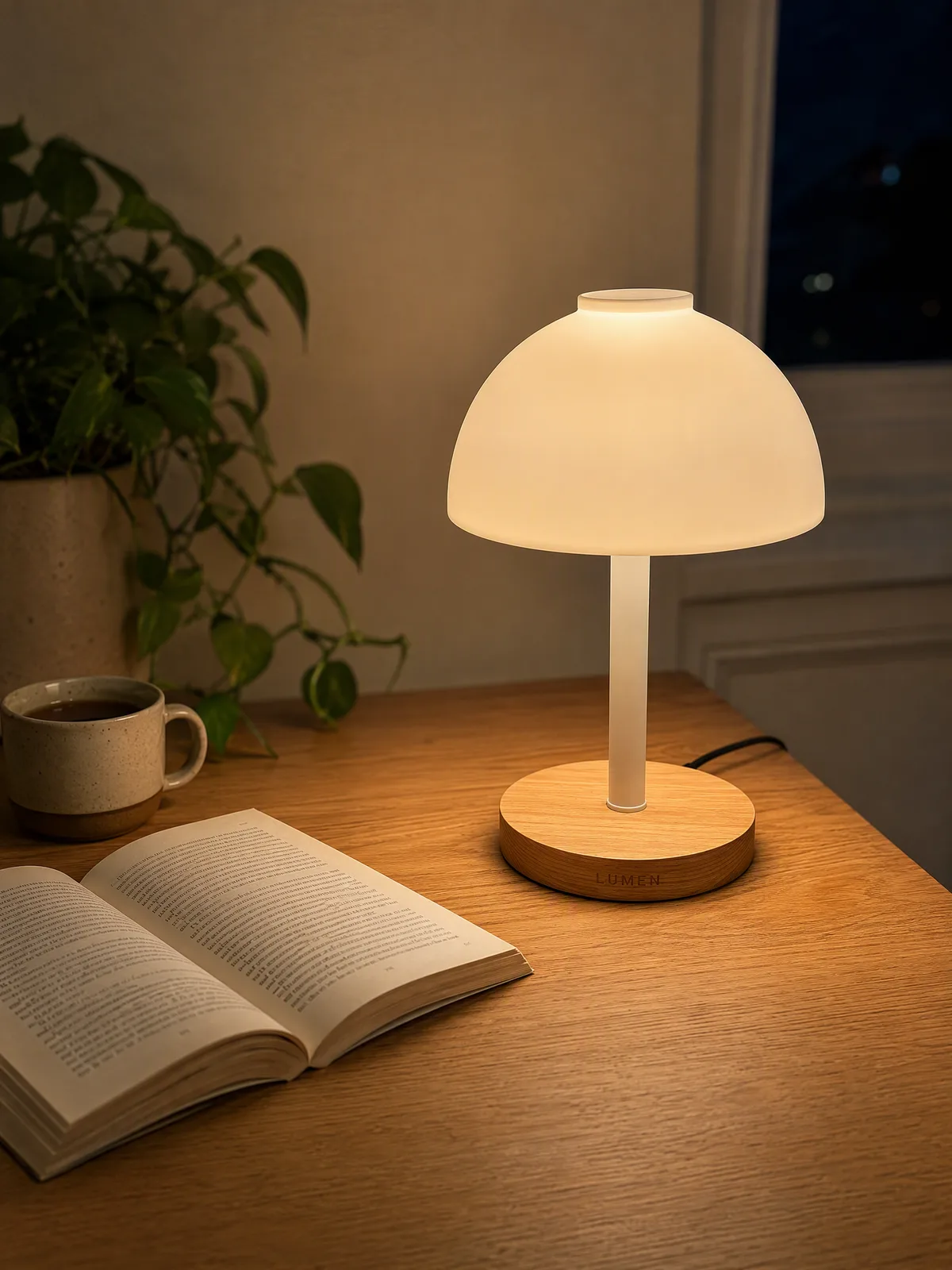
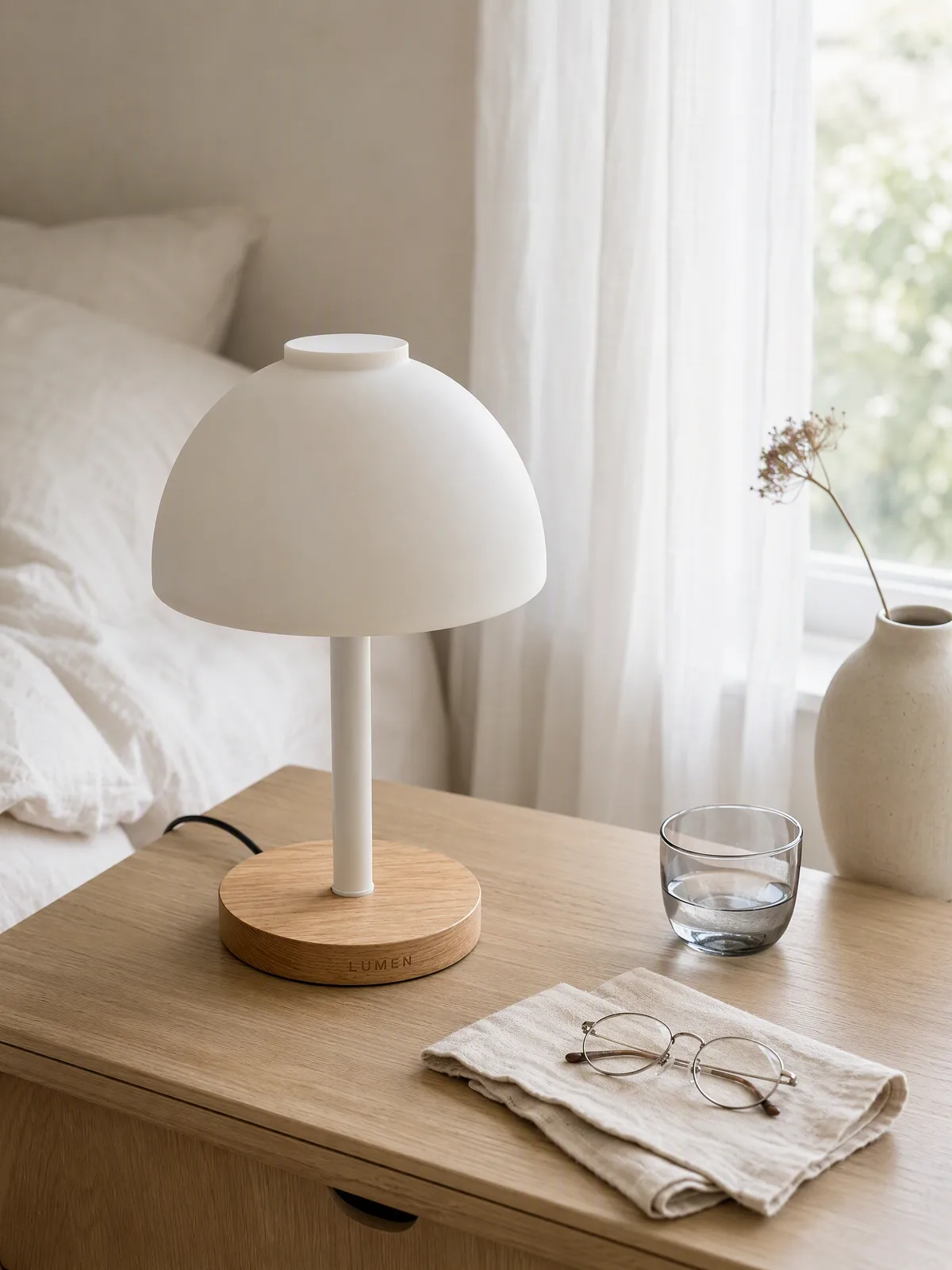
Two scene shots, 3:4: a desk at night with the lamp on, warm; a bedside table in the morning, lamp off, window light.
A lamp is two products, lit and unlit, so it gets two moods. The night frame sells the light: a book, a mug, a pool of warmth. The morning frame sells the object: shape, oak base, how it sits next to a glass of water.
Serum
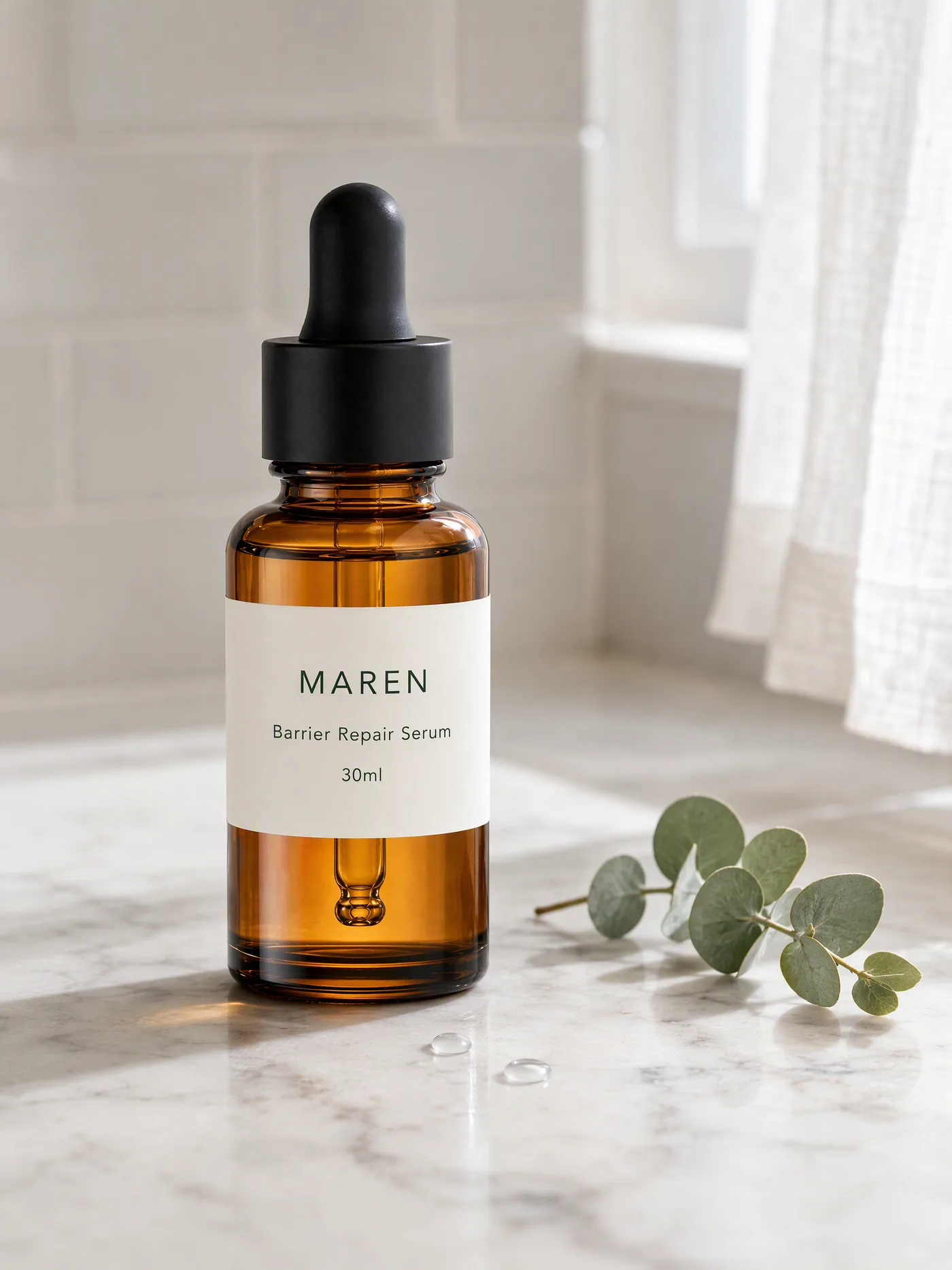
Same bottle on a marble counter by a window, morning light, one eucalyptus sprig. Then one on a wooden vanity with a mirror.
The original case. A skincare bottle belongs on a surface that looks clean and expensive. The label stays legible because the bottle is placed from the photo, not repainted.
What carries over
Name the surface, the time of day and one prop. Say the shape. The agent reads the product's category from the photo and chooses light, props and distance to match. The prompt for a lamp and the prompt for a dog treat differ by one line each, and the results do not look related.